
The natural response is to use public AI tools. They're fast, accessible, and seem like the perfect solution. But here's the challenge: uploading sensitive business documents to external platforms means your data passes through servers you don't control. You lose visibility into how it's stored, processed, or retained. For businesses handling confidential information, this creates genuine risk. That's why secure AI knowledge systems built specifically for small and mid-sized enterprises are becoming essential. They provide fast access to internal knowledge without compromising control over your data.
1. The Real Problem: Information Exists But Isn't Accessible
Most organizations don't have an information shortage. They have an access problem. Critical knowledge lives scattered across PDFs, Word files, spreadsheets, and email threads. When someone needs a specific answer, they dig through folders, interrupt colleagues, or rely on the few people who "just know where things are." This creates bottlenecks and slows down operations. New employees take weeks to get up to speed because there's no structured way to access institutional knowledge. Customer-facing teams can't quickly reference the latest pricing or policy updates. Compliance teams manually search through documents to verify regulatory adherence. The core issue isn't lack of documentation. It's that documentation isn't structured in a way that makes it useful when decisions need to be made.
2. Where This Solution Applies
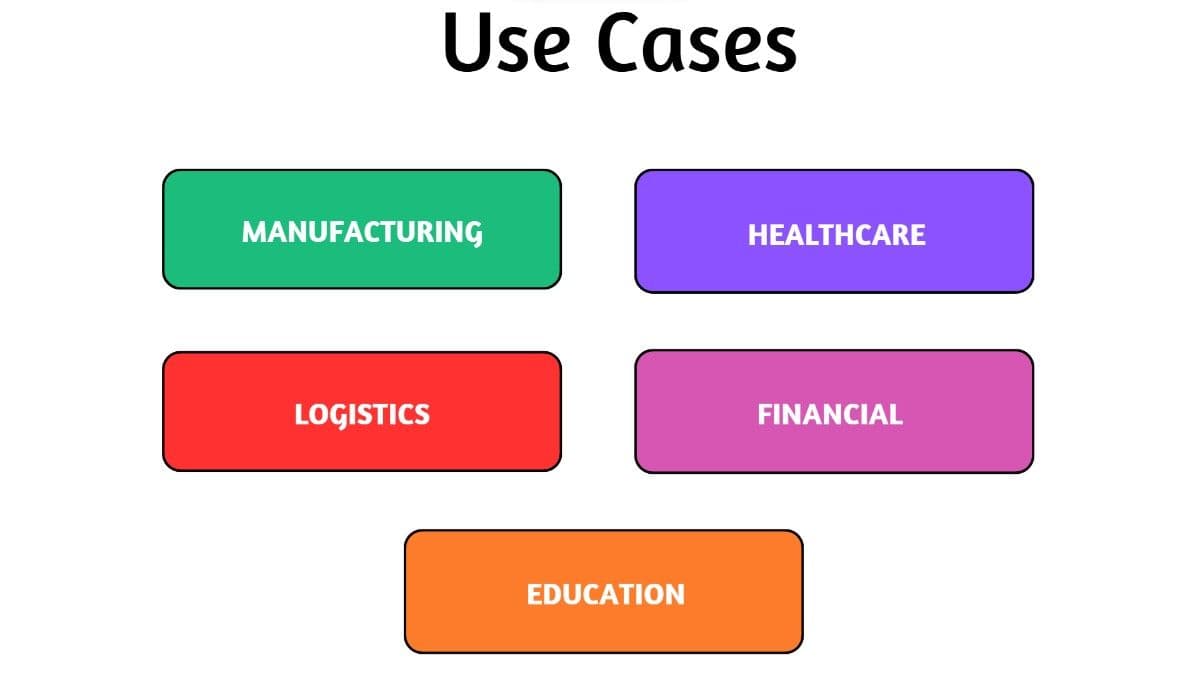
2.1 Manufacturing and Production
Production teams need instant access to equipment manuals, safety protocols, quality standards, and maintenance schedules. When a machine goes down or a process question arises, waiting for someone to locate the right document costs time and money. Floor managers and technicians benefit from systems that deliver answers from technical documentation in seconds.
2.2 Healthcare and Medical Practices
Clinics and healthcare facilities manage patient protocols, compliance guidelines, insurance procedures, and treatment standards. Staff need quick, accurate answers to policy questions without risking compliance errors or referencing outdated files. Ensuring teams access the correct, current version of critical documents is non-negotiable.
2.3 Logistics and Supply Chain
Logistics companies handle shipping regulations, customs documentation, vendor contracts, and operational procedures across multiple locations. Dispatch teams, warehouse managers, and customer service representatives need immediate access to accurate information to eliminate confusion and reduce delays.
2.4 Professional Services and Consulting
Consulting firms, law offices, and accounting practices rely on case histories, client agreements, regulatory guidelines, and internal methodologies. When preparing proposals or advising clients, professionals need to reference the right documents quickly without navigating complex folder structures.
2.5 Financial Services and Insurance
Financial institutions manage policy documents, compliance requirements, product terms, and risk assessments. Customer-facing teams and back-office operations need fast, precise answers to maintain consistency across teams and locations while avoiding costly errors.
Interested in seeing how this works for your organization? Request a demo to explore how a secure AI knowledge system can transform your internal operations.
3. What Makes a Secure AI Knowledge System Different
A secure AI knowledge system transforms static documents into an intelligent, searchable resource that answers questions using only your internal data. The platform converts uploaded documents into formats that AI can process, indexes them using vector-based semantic search, and generates responses grounded entirely in your content. Answers come from your files, not the open internet or third-party datasets.
3.1 Key Architectural Features
- Data Isolation: Each organization operates within a dedicated workspace. There's no risk of data mixing between different entities. Your documents remain completely separated from other users of the platform.
- Deployment Flexibility: The system can run on a local server for maximum control or in the cloud for operational flexibility. Whether you choose on-premises deployment or cloud hosting, the architecture ensures your data remains within your defined environment.
- Document-Only Responses: The AI generates answers exclusively from your uploaded documents. It does not access or use any external data sources. This keeps responses grounded in your internal knowledge and prevents the AI from pulling information from unrelated or unreliable sources.
4. How It Works in Practice
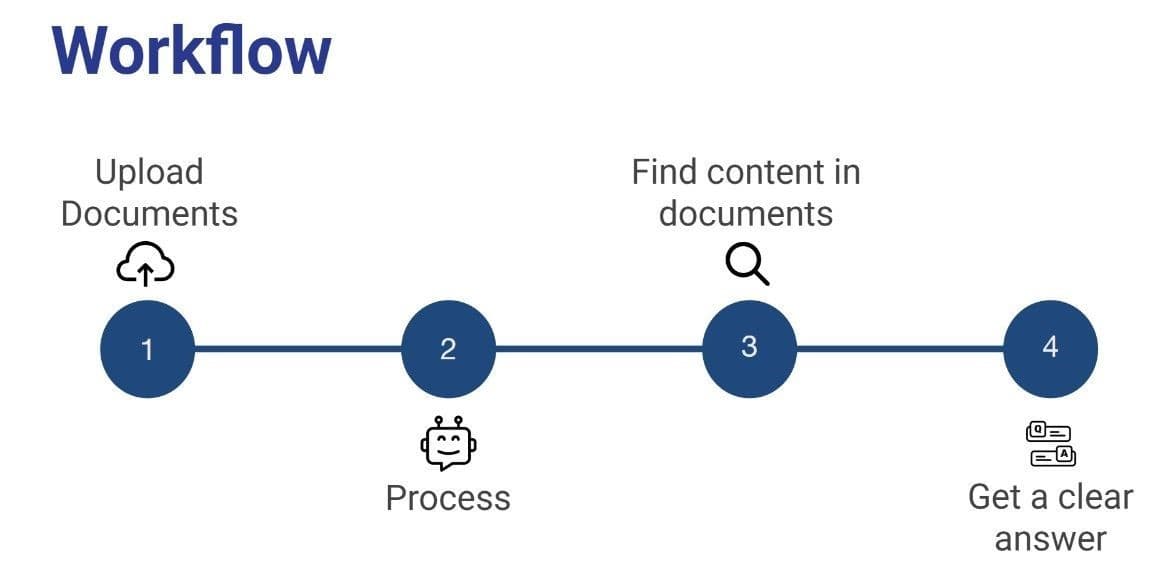
4.1 Upload and Organize Documents
Administrators upload internal files through a centralized dashboard. The system processes and indexes them within a workspace dedicated exclusively to your organization. Documents are converted into searchable formats using vector-based indexing.
4.2 Ask Questions in Plain Language
Team members type questions the same way they'd ask a colleague. The system searches your knowledge base using Retrieval-Augmented Generation (RAG), retrieves relevant sections from the right documents, and generates a precise answer based only on that content.
4.3 Manage Access and Monitor Quality
Administrators track quality scores to understand how well documents are structured to deliver accurate responses. If certain files consistently underperform, you can revise or reorganize them. The platform also maintains audit trails for compliance and accountability.
5. Real Applications Across Business Functions
5.1 Internal Operations and Knowledge Management
HR teams answer employee questions about benefits, policies, and procedures without manually searching through handbooks. Operations teams reference standard procedures instantly. Finance teams pull historical contract terms and approval workflows on demand.
5.2 Customer Support and Sales Enablement
Support teams retrieve accurate product details, troubleshooting steps, and policy information without escalating simple queries. Sales teams access up-to-date pricing, contract terms, and case studies in seconds instead of relying on outdated materials or waiting for answers from product teams.
5.3 Onboarding and Training
New hires interact with training materials, role-specific guides, and company documentation through conversational queries. They get answers immediately rather than waiting for scheduled training sessions or relying on busy colleagues. This accelerates ramp-up time and reduces the burden on managers.
5.4 Compliance and Audit Preparation
Regulated industries use these systems to maintain audit trails, retrieve historical policies, and ensure teams reference the correct version of critical documents. When auditors request specific information, teams can pull it instantly instead of spending days gathering files.
5.5 Product Development and Engineering
Engineering teams reference technical specifications, design documents, and previous project notes without interrupting colleagues or digging through scattered repositories. Product managers access feature requirements, customer feedback summaries, and roadmap documents to make informed decisions quickly.
6. Why Small and Mid-Sized Businesses Need This Now
Large enterprises have the resources to build custom knowledge management systems with dedicated IT teams and significant budgets. Smaller businesses typically don't. But SMEs and MSMEs face the same challenges. Information is scattered. Decisions are delayed because the right document is hard to find. Knowledge walks out the door when experienced employees leave. And there's increasing pressure to adopt AI without compromising data security or control. A secure AI knowledge system gives smaller organizations the same capability to extract value from their documents without enterprise-level complexity or cost. Implementation is straightforward. Set up a workspace with a unique organization ID, upload your documents, and team members start asking questions. There's no need for data science expertise, custom coding, or lengthy integrations.
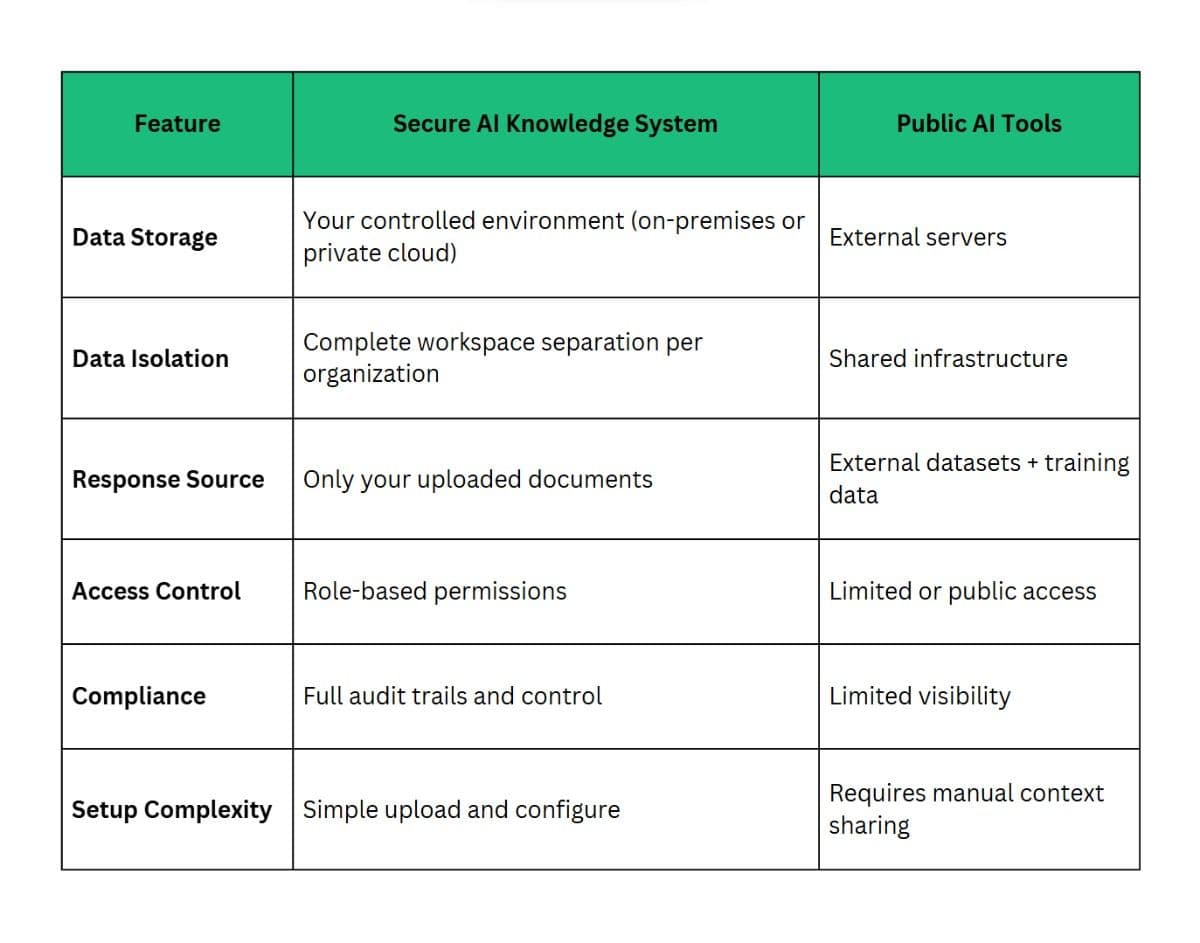
7. Secure AI Knowledge System vs. Public AI Tools
8. Moving Forward
The future of business knowledge isn't about accumulating more documents. It's about making existing knowledge instantly accessible, accurate, and actionable. For small and mid-sized businesses, this represents a genuine competitive advantage. Organizations that control their internal knowledge will move faster and make better decisions. Those still relying on manual search or fragmented processes will struggle to keep up. The question isn't whether to adopt AI-powered knowledge systems. It's whether you'll choose one that keeps your operations running smoothly while maintaining control over your most valuable asset: your internal knowledge.